3Q 2026 HDB Quarterly Report: HDB Resale Prices Continue Falling Even as Transactions Balloon After Lifting of 15-Month Wait Out Rule
Research2 Oct 20265 min read

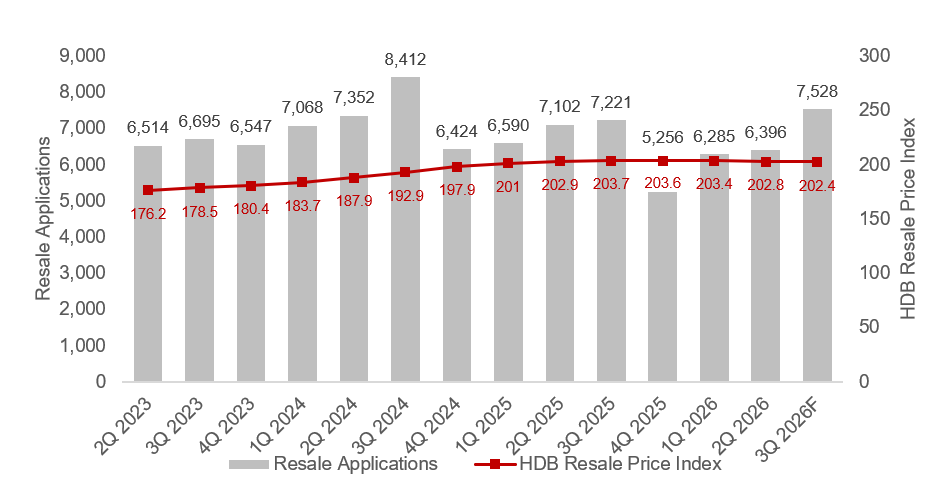
In 3Q 2026, the HDB Resale Price Index (RPI) fell by a modest 0.2% quarter-on-quarter (q-o-q) to 202.4 from 2Q 2026’s figure of 202.8. This downtick also extends the ongoing slide in the RPI for a third quarter since 1Q 2026.
In contrast, HDB resale transactions rose sharply by 17.7% q-o-q, from 6,396 cases in 2Q 2026 to 7,528 in 3Q 2026. On the year, a more measured uptick of 5.2% was observed, based on the 7,157 resale units recorded for 3Q 2025’s flash estimates.
HDB Resale Price Index (RPI) Continues Decline Despite Sharp Increase in Transaction Volume
Chart 1: HDB RPI vs Number of Transactions
Quarterly HDB Resale Volume Balloon as Private Property Right-Sizers Return
In 3Q 2026, a total of 7,528 resale flats were sold, reflecting a 17.7% q-o-q increase from the 6,396 units recorded for 2Q 2026.
Although factors such as higher retrenchments, tighter financing conditions, and the seasonal Hungry Ghost Festival were expected to weigh on buyer sentiment in 3Q 2026, resale HDB transactions still rose from the previous quarter. This uptick was likely driven by private property right-sizers re-entering the market following the removal of the 15-month wait-out period.
With the rule scrapped, right-sizers are no longer required to observe a mandatory waiting period before purchasing public housing. As a result, some of these former private property owners may have been motivated to make a move sooner, particularly those seeking to secure an HDB flat and unlock liquidity more quickly.
That said, demand from private right-sizers may eventually taper off in the long run as these buyers are gradually absorbed into the HDB resale pool. At the same time, the greater number of flats exiting their Minimum Occupation Period (MOP) this year, alongside ample BTO supply, is expected to provide buyers with more options.
More MOP Flats Anticipated in 2026
With 13,480 HDB flats fulfilling their MOP in 2026, this puts pipeline supply for the HDB resale market at its highest since 2023. Moreover, this marks a 93.3% year-on-year increase from the 11-year low of 6,973 units recorded in 2025.
With this sharp rebound in MOP flat volume, buyers targeting a resale HDB flat may benefit from a broader range of available units and possibly less intense competition this year. This increase in MOP supply, alongside a steady BTO pipeline, is also expected to support more balanced market conditions over the medium term.
Chart 2: Number of MOP Flats by year
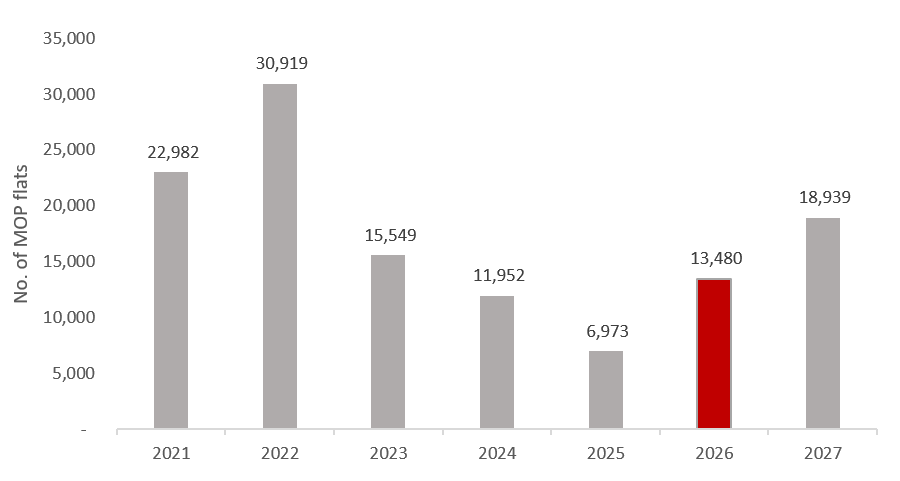
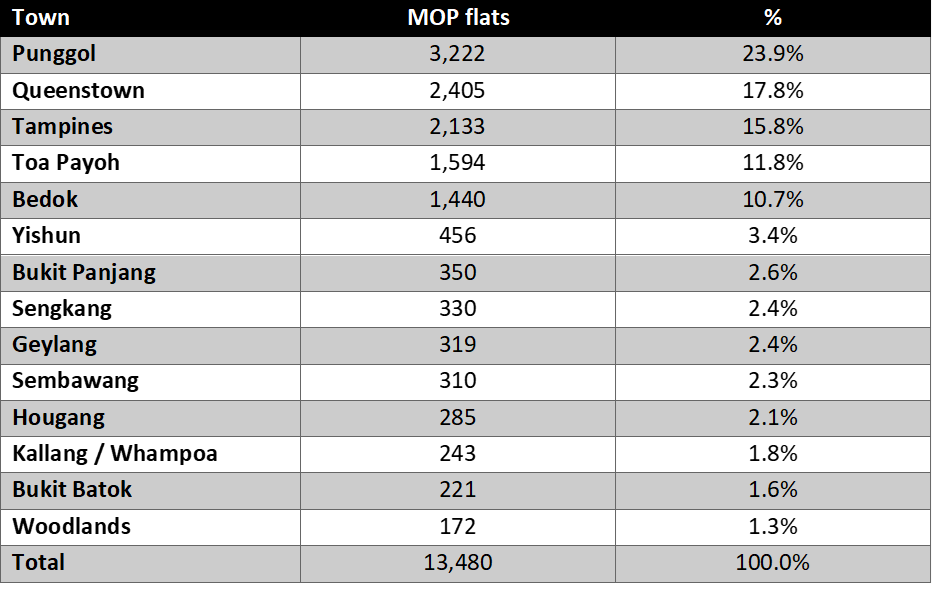
Table 1: Distribution of MOP Flats by Town in 2026
Million-Dollar HDB Resale Flats Exceeds 500 Transactions
According to HDB resale transaction data, at least 597 flats were resold for $1 million or more in 3Q 2026, crossing the 500-unit mark for the first time and setting a new quarterly high. Demand in this segment could have been driven by cash-flush private homeowners, who now face less friction when entering the HDB resale market.
Chart 1: Resale HDB Flat Transactions priced at $1M and above
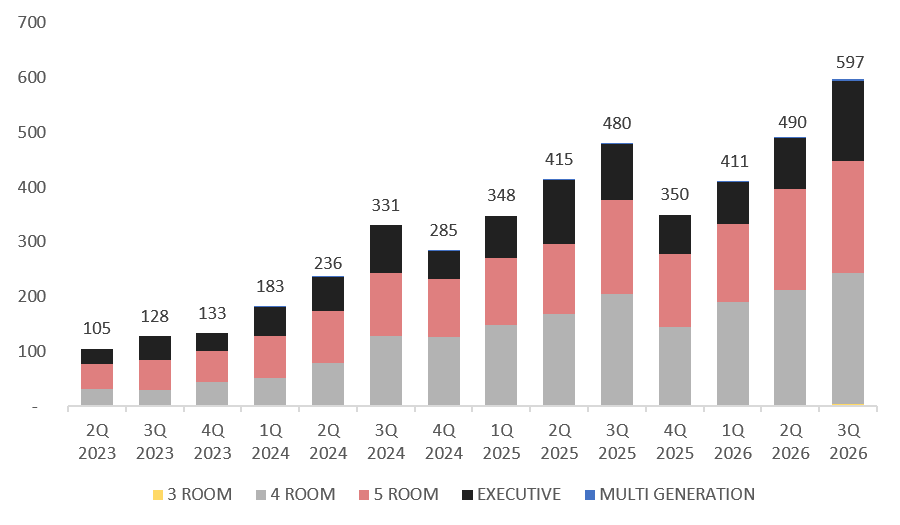
The majority of million-dollar flats sold were concentrated in mature towns, including Toa Payoh (93 units), Queenstown (86 units), and Bukit Merah (56 units).
The bulk of these high-value deals were also concentrated in landmark projects in sought-after precincts, like Bidadari and Dawson. Between Alkaff Oasis and Alkaff Courtview in Bidadari, there were 63 million-dollar flat sales recorded in 3Q 2026, while Dawson Vista, SkyVille@Dawson, SkyParc@Dawson, and SkyTerrace@Dawson saw 38 such deals in total.
$500K to $750K Range Remains the Sweet Spot for Resale HDB Buyers
Chart 4: HDB Transactions by Price Ranges
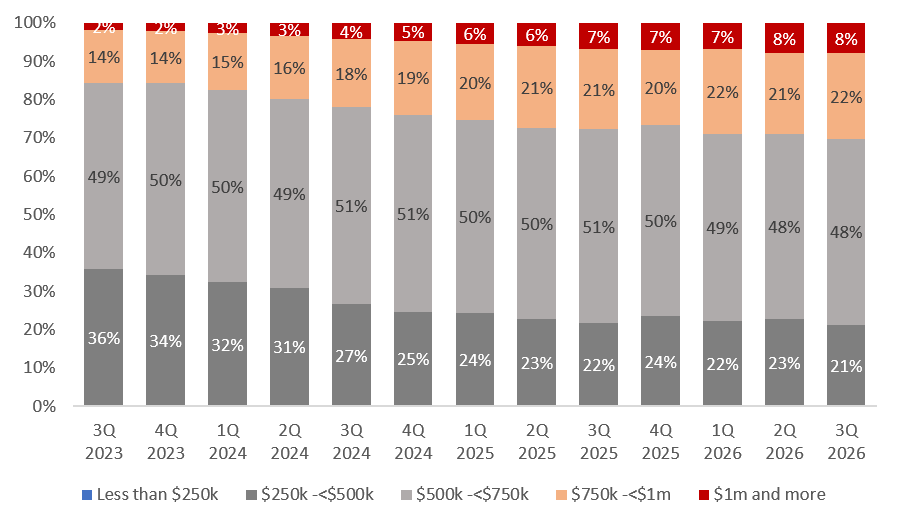
In 3Q 2026, nearly half (48.4%) of all HDB transactions fell within the $500,000 to $750,000 range, which is considered to be affordable for many local buyers. Meanwhile, 21.2% of resale HDB flats transacted during the quarter were priced between $250,000 to $500,000. Collectively, this indicates that the majority of HDB resale transactions (69.6%) remains affordable for the average homebuyer.
ERA’s Outlook and Forecast for 2026
Table 2: ERA forecast of HDB Resale Market

Barring unforeseen circumstances, HDB resale price growth is likely to remain measured in the foreseeable future. On the supply side, more flats are expected to exit their MOP this year, alongside a growing BTO pipeline. The revised monthly household income ceiling of $18,000 could also encourage more first-timer families to apply for BTO flats instead of turning to the resale market, especially if they have sufficient time to wait.
Transaction activity could continue to pick up in the coming months, as more private property right-sizers return to the HDB resale market. However, this is unlikely to trigger any sharp spikes in prices over the long term, given that most of these buyers are genuine owner occupiers rather than speculative buyers.
Buyer behaviour is also likely to remain cautious. With slower employment growth and rising retrenchments, households may become more selective and price conscious, as affordability continues to guide their purchase decisions. Moreover, buyers will be less likely to pay Cash Over Valuation (COV) unless their chosen flat possesses compelling attributes, such as a longer remaining lease or proximity to neighbourhood amenities such as schools or MRT stations.
For 2026, we expect the HDB resale market to record around 26,000 transactions, with annual price growth ranging between 2% and 5%. This would be consistent with a stable and sustainable market, where activity remains supported, but price increases are kept measured.